
Progressives rack up exciting wins in Memphis and nationwide—Finally Fridays
Justin J. Pearon's primary victory, plus an election post goes viral on TikTok, and using AI as an election assistant

The Breakdown: Primary wins by Pearson, El-Sayed, and others continue the progressive populist wave
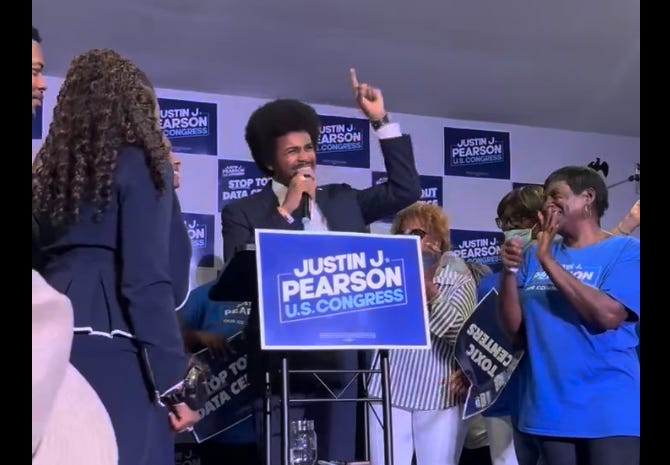
Last night, State Rep. Justin J. Pearson decisively won the Democratic primary in Tennessee’s newly redrawn 9th US Congressional District. Pearson defeated State Sen. London Lamar—who carried the endorsement of 20-year Congressman Steve Cohen—by a resounding margin, with final unofficial results giving Pearson 65.75% of the vote compared to Lamar’s 24.32%.
Not only that, Pearson won all 15 counties in the district. And no, that is not a typo: despite GOP lawmakers carving Memphis into three sprawling pieces during a special session unofficially designed to dilute Black voting power—creating the new 191-mile-wide, 15-county 9th District—primary voters showed up to deliver a clear mandate for Pearson. Instead of following the establishment endorsement of Lamar, voters chose Pearson’s progressive platform of Healthcare for All, a living wage, raising taxes on the rich, and environmental justice.
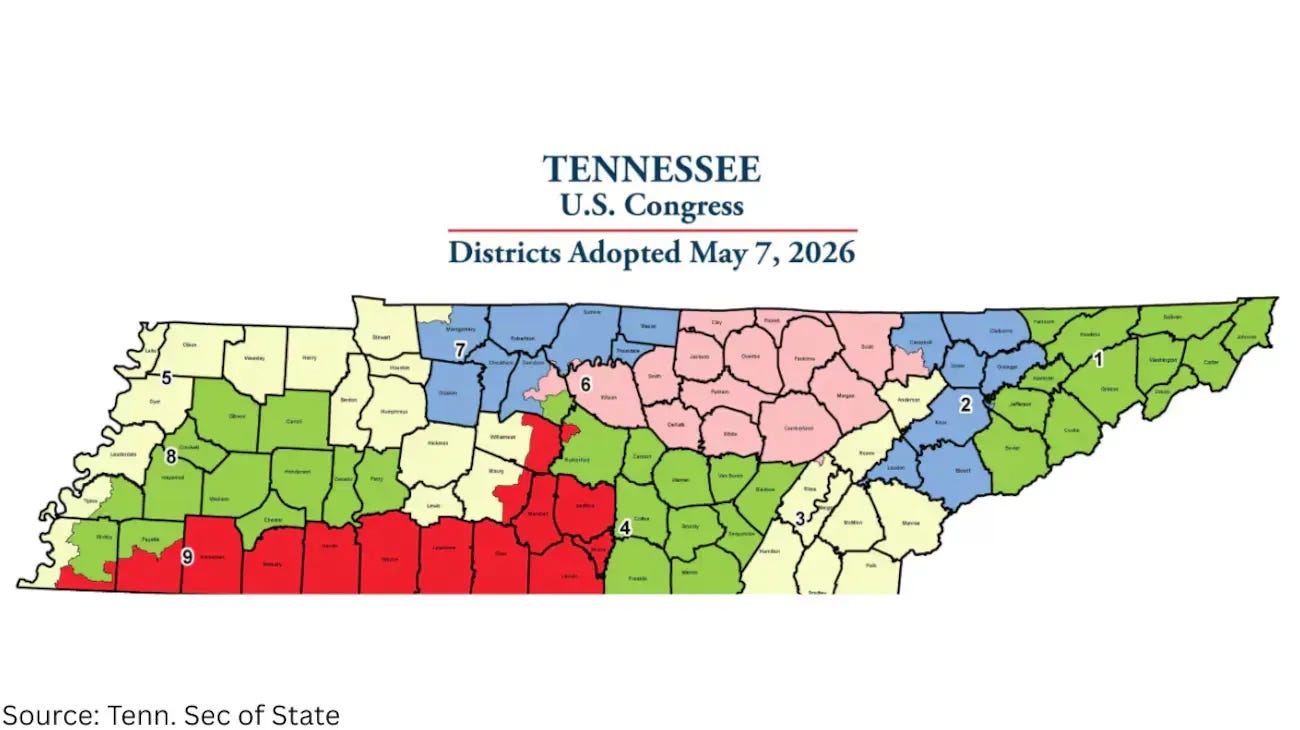
Pearson will be facing Republican Brent Taylor, a strong supporter of both Donald Trump and gubernatorial candidate Sen. Marsha Blackburn, in November. Given the GOP’s extreme redistricting, Taylor is the mathematical favorite to win this fall. However, Pearson has a long history of energizing people both as an activist and as a State Representative—he was one of the “Tennessee Three” who gained national attention for demanding commonsense gun reform.
Pearson’s victory continues the broader progressive wave that has sent ripples across the nation. Just this past Tuesday, unabashed progressive Abdul El-Sayed won the Democratic primary in a closely-watched race. El-Sayed overcame $50 million in outside spending from AIPAC and affiliated pro-Israel groups as well as the full weight of the Democratic establishment and national media backing his opponent, Haley “I dream of Israel” Stevens.
If political pundits try to write off these victories as a localized New York or Midwest fluke, the map tells a very different story.
Justin Pearson defying gerrymandering in Tennessee
James Talarico making waves in Texas
Melat Kiros defeating a 30-year incumbent in Denver
Katie Wilson taking Seattle
Myrna Muñoz beating Big Tech-backed Democrats in Oregon
El-Sayed and Donovan McKinney winning in Michigan
Claire Valdez and others in New York.
The message from voters across the Northeast, Midwest, South, Plains, and Pacific Coast is loud and clear: working-class movement politics is winning across the country. And progressives are increasingly beginning to set their sights on November’s national general elections.
Posting Through the Madness: Social Media Helps Spread the Word for Primaries
Back in the bad old days, people would forget to go vote—especially for primaries or local off-year elections that are receive less news coverage. While there are certainly downsides to social media, one clear advantage is that social media makes it much harder to forget to vote, both through specific alerts and, as I unexpectedly found out, the algorithm making election-related posts go viral.
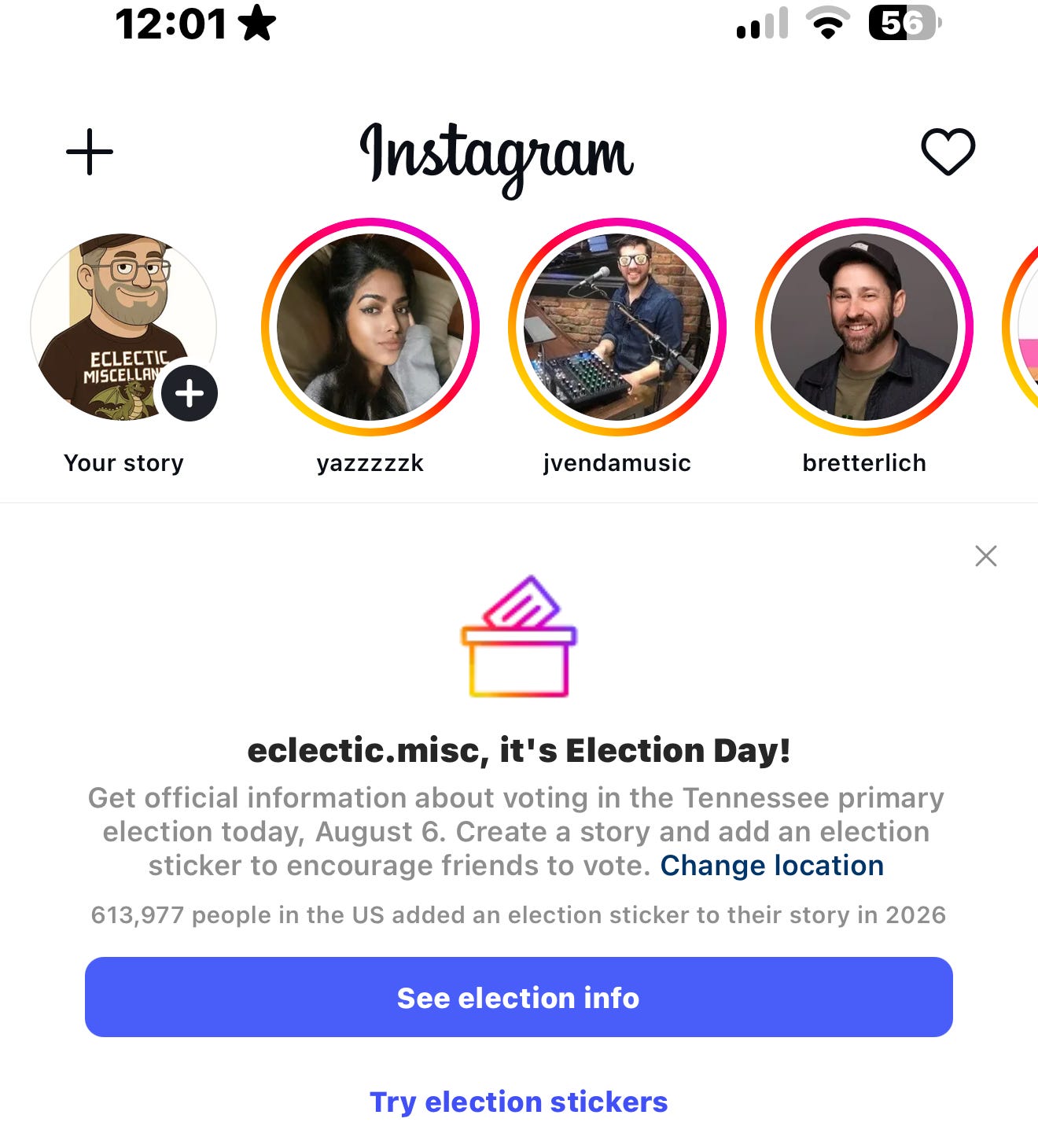
Direct Platform Alerts: Certain apps, like Instagram, can explicitly remind you when Election Day is based on your location. This can be especially important in places like Tennessee that buck the national trend of Tuesday for all elections (our primaries and local elections fall on Thursdays, while the general federal elections are on Tuesdays).
If I weren’t writing a newsletter about the election or closely tracking specific races, there is a real chance I would have forgotten the date. Social media platforms helping to get out the vote is one genuinely positive feature of modern social media apps.
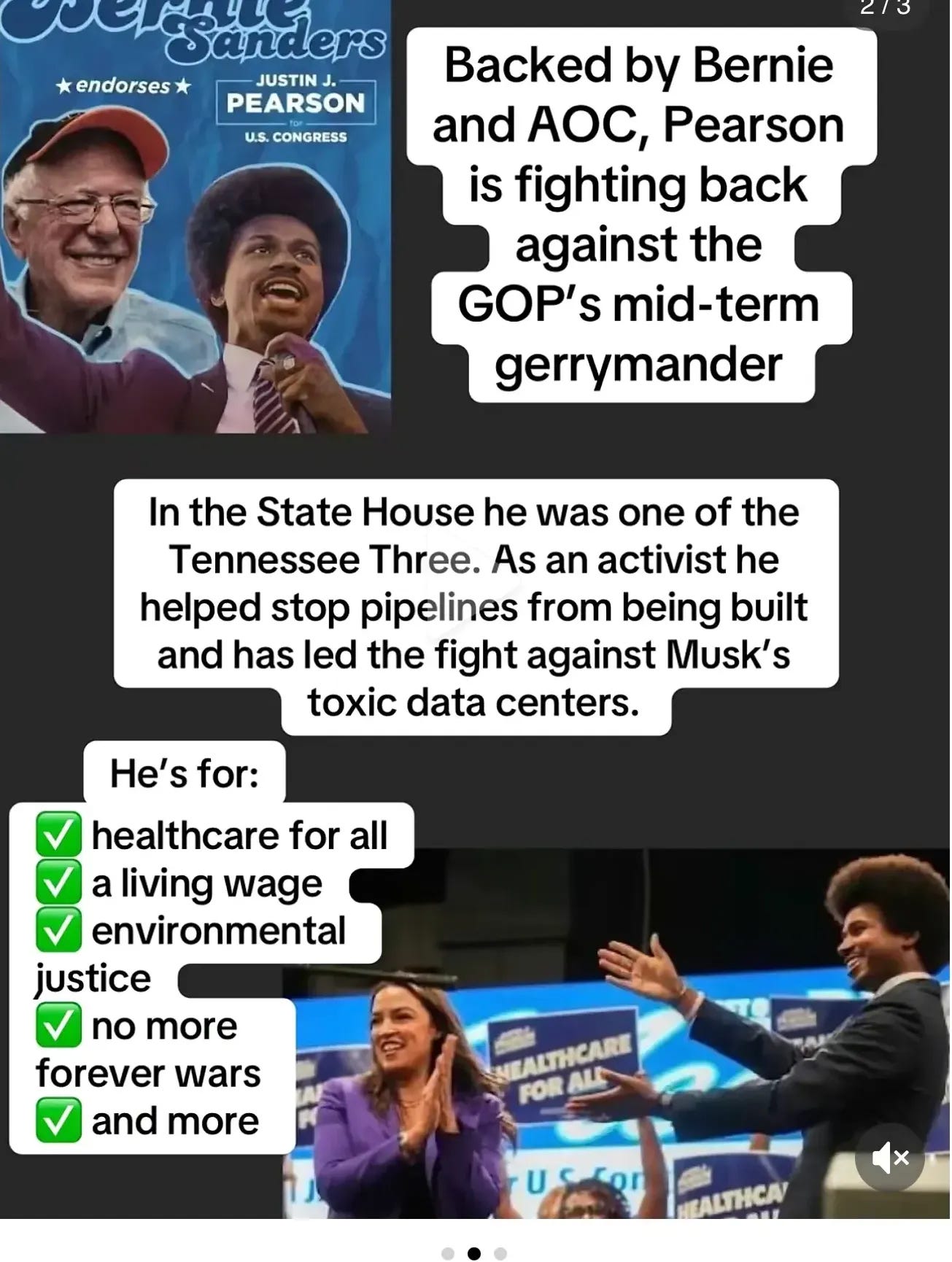
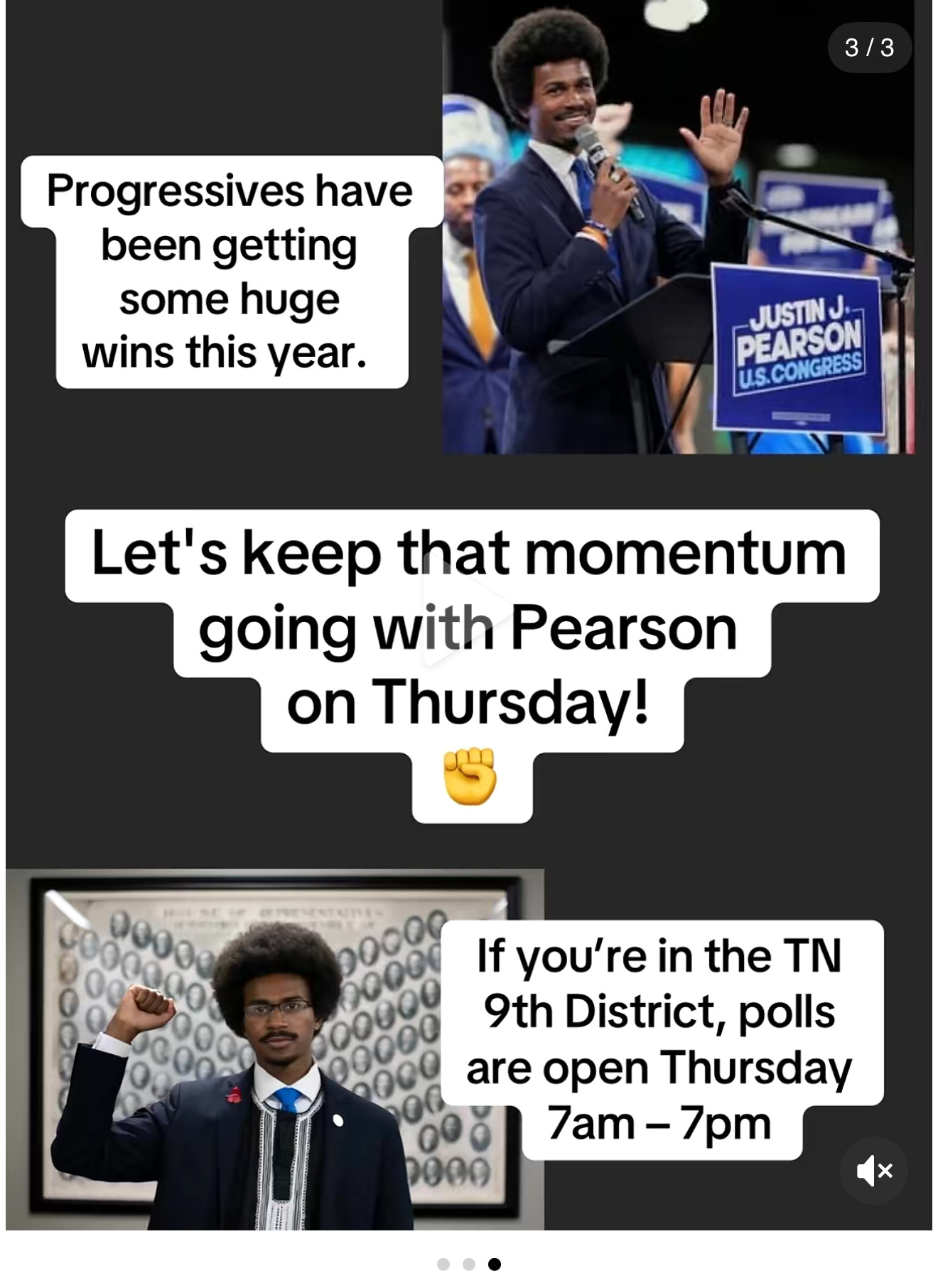
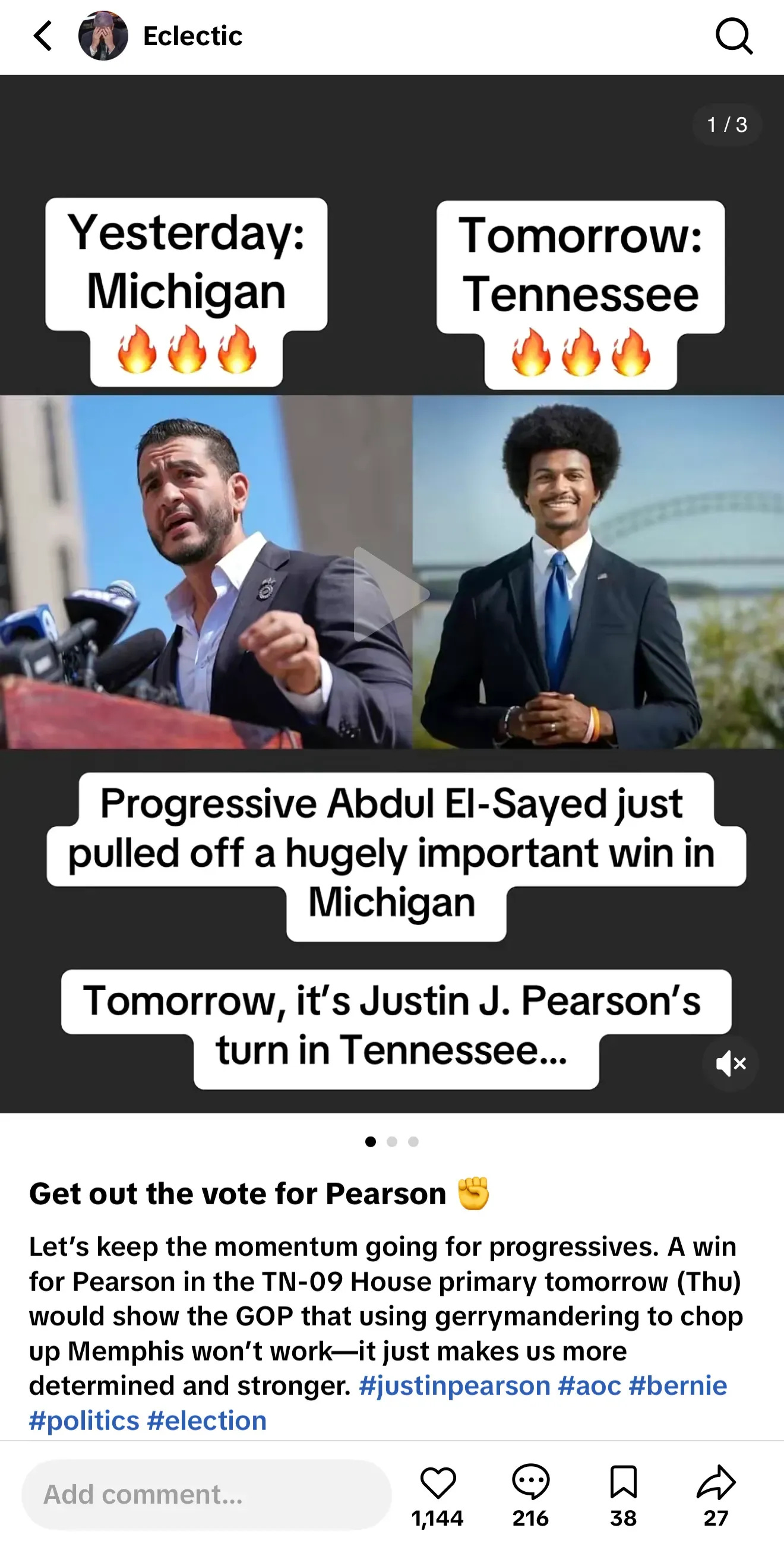
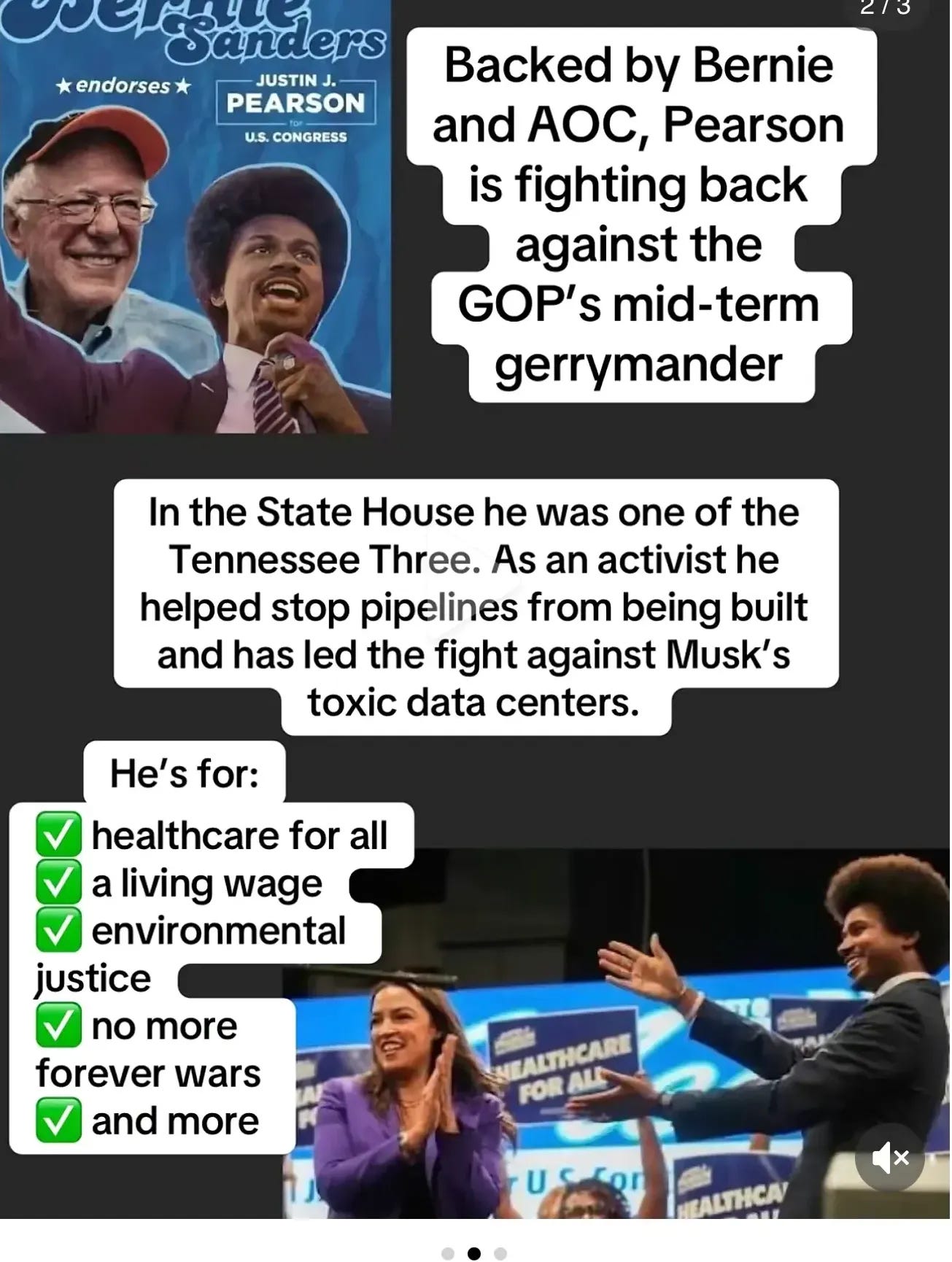
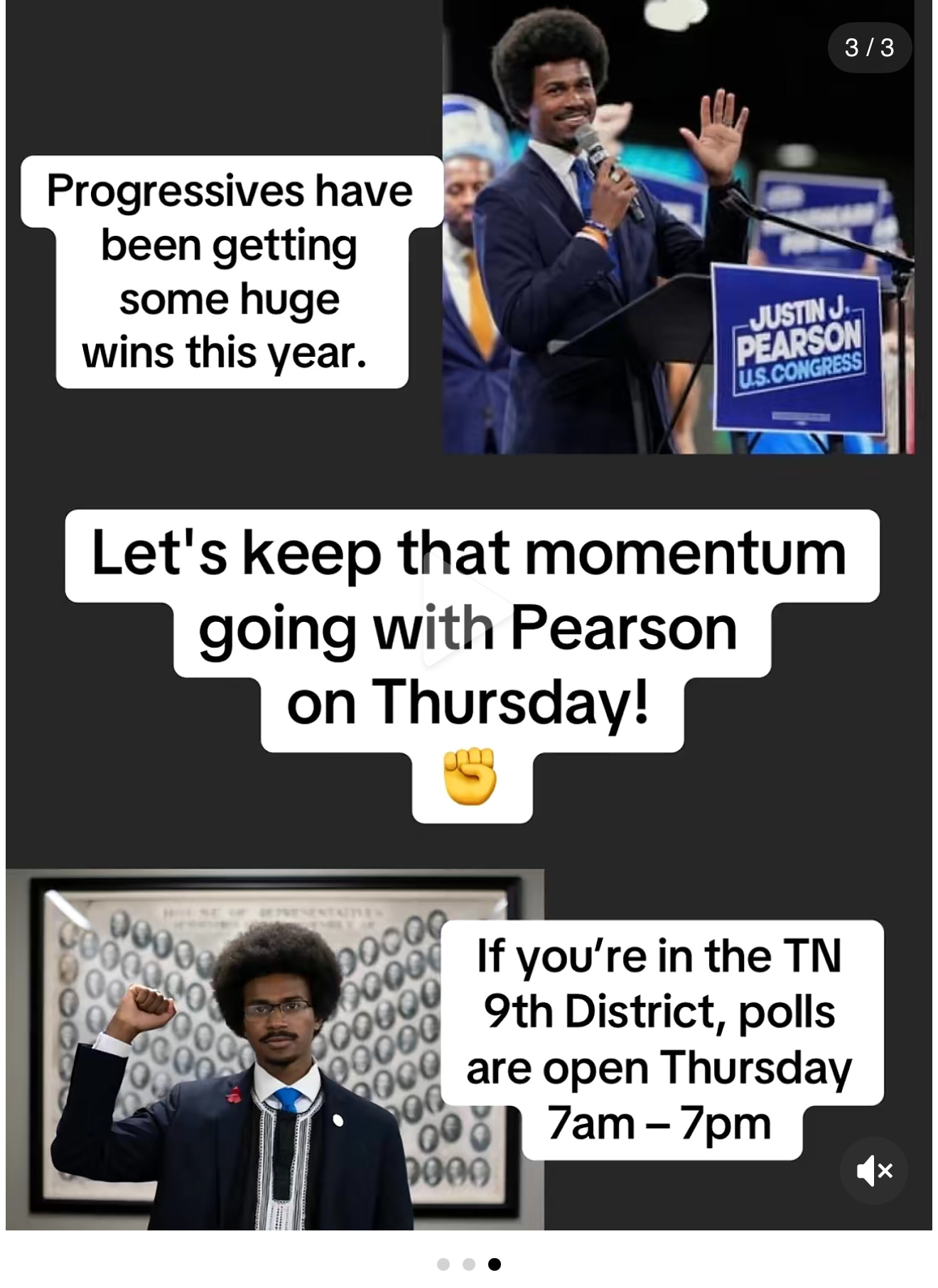
Viral post boosted by the algorithm: Earlier in the week, I noticed several other people’s posts that had blown up on Threads and X ahead of Michigan’s and Tennessee’s votes. Little did I know that a quick TikTok post of mine published Tuesday night, urging people to vote for Justin J. Pearson, would unexpectedly become my most-liked and second-most-viewed video ever on the platform.
The core idea was simple and the execution was intentionally low-tech: Abdul El-Sayed just won his high-profile primary in Michigan on Tuesday. On Thursday, it’s Justin J. Pearson’s turn in Tennessee.By Thursday morning, my phone started figuratively blowing up with notifications. As of this writing, the post has reached over 16.4k views, 1,144 likes, and 215 comments. The vast majority of the feedback was overwhelmingly positive, and at least two commenters explicitly stated they hadn't planned on voting until seeing the post, but would now go out and vote to support Pearson. Knowing a simple 3-slide post led to actual real-world ballots being cast is fantastic.
Of course, a viral political post also draws negative comments—most of them harmless, though a few were hostile or even overtly racist. One of my favorite, wildly misinformed reactions read: “this is how sharia law starts.” To which I replied: “Sharia law starts by the son of a Christian preacher running for Congress? Okay…”
By Thursday night, once polls closed across Tennessee, activity on the post plummeted back to normal levels. Whether that was intentional on TikTok's part or pure algorithmic chance, I’m glad it got thousands of people thinking about Tennessee electoral politics in between scrolling through other videos.
Beyond the News: AI Helped Me Vote
As someone who likes keeping up with the latest tech—both for my day job and my own personal life—I decided to try a new experiment for this election cycle related to AI.
Shelby County, TN posts sample ballots online before every election. Even for someone who follows national and local news closely, it is an almost-impossible challenge to stay well-informed on every single race. Small municipal or judicial contests rarely get newspaper coverage, while other races may feature a crowded field of candidates where most voters only recognize one or two names.
While some voters leave races blank or simply "vote blue no matter who" (or the Republican equivalent: would that be "vote red no matter what they've said"?), I try to cast a vote in every race where I can make a reasonably informed decision. This time, AI—specifically Gemini, though other chatbots function similarly—turned out to be a massive help.
I could easily spend half a day hunting down basic candidate info: locating an official website or social media page, checking the candidate’s declared policy stances, reviewing past offices held, or finding local media endorsements—assuming any of this is even available.
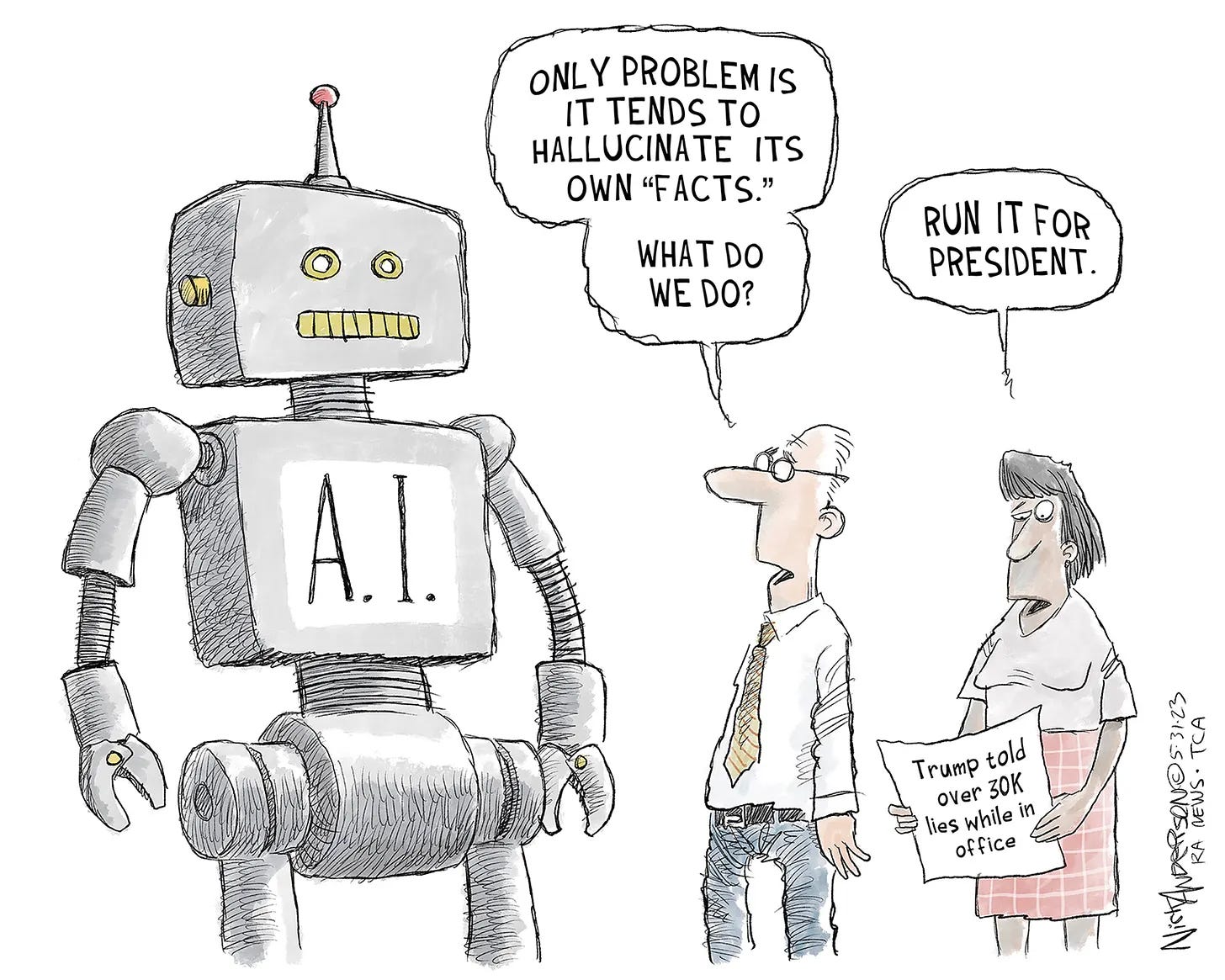
This time around, AI sped up my initial vetting process. As a progressive-slash-democratic socialist, I’m generally not looking to vote for an establishment, center-right candidate. I asked Gemini to put together brief overviews of the candidates' general policy orientations. The AI provided direct source links, allowing me to verify the facts behind those summaries and ensure the model wasn’t hallucinating—an essential practice when doing researching with AI chatbot.
Equipped with those summaries and links, I dove deeper into the candidates whose platforms best matched with my values. There were several candidates—and one local referendum—I initially either did not know at all, or as much as I’d like to, where AI helped bridge the information gap. This made my background research significantly faster and less frustrating.
There are a lot of valid reasons to be wary about AI—from corporate environmental footprints especially of some companies (which we know all too well in Memphis), to very real concerns about lost jobs, to potential hallucinations.
But when utilized responsibly and critically as a personal research assistant, AI can transform a time-consuming task into a more manageable one. Trying out AI as an election researcher helped me become a more informed voter—and using technology to help fulfill my civic duty feels like a genuinely good use case.